

Multiage Preschool + Junior Kindergarten · Ages 2.5–6
A West Seattle Mindfulness Based, Montessori Inspired Preschool
At The Cove School, children learn to be curious, capable, flexible thinkers while developing the social, emotional and academic foundations they need for school and life.
Ages 2½–5
Small Classes
Multi-Age Learning
Forest Kindergarten
Mindfulness + SEL
Ages 2½–6
Small Class sizEs
Multi-Age Learning
Forest Kindergarten
Mindfulness + SEL
CONVERSATIONS WITH OUR FOUNDER
A Different Way of Seeing Children
How we see children shapes how we respond to them. And how we respond shapes what becomes possible.
Join our founder, Renee Metty, as she shares the philosophy, perspectives, and intentional practices that make The Cove a different kind of preschool.
Welcome to The Cove
Living an interesting, fun-filled, opportunity-stuffed life.
Friendly + flexible. Curious + engaged. Following a path that makes them thrilled-to-the-tips-of-their-toes happy. Don't we all want that life for our children?
We believe every child has a unique contribution to make to the world - and finding that contribution leads to a joyful + successful + complete life. We focus on social + emotional learning and mindfulness at our core. Of course (of course!) our students learn numbers, letters, reading, and math. But more importantly, they learn that positive language and mindfulness is a way of being – not a solution to a problem.
In fact, we discourage use of the word can't at our school. Instead, we say “How can I?” That opens a world of possibilities.
Pop in for a visit or drop us a line to arrange a tour. We can't wait to meet you!
Why The Cove
Preschool is about more than preparing children for kindergarten.
Mindfulness + Social Emotional Learning
Children develop awareness of themselves, their emotions, relationships and the world around them.
Curiosity + Exploration
Learning happens through doing, questioning, creating, playing and experimenting.
Confidence + Flexible Thinking
Instead of stopping at ‘I can’t,’ The Cove encourages children to ask, ‘How can I?’
The Whole Child
Academic learning matters, but so do independence, initiative, creativity, compassion and perspective.
Mindfulness + Social Emotional Learning
Children develop awareness of themselves, their emotions, relationships and the world around them.
Curiosity + Exploration
Learning happens through doing, questioning, creating, playing and experimenting.
Confidence + Flexible Thinking
Instead of stopping at ‘I can’t,’ The Cove encourages children to ask, ‘How can I?’
The Whole Child
Academic learning matters, but so do independence, initiative, creativity, compassion and perspective.
The Cove Difference
What if nothing was wrong? Then everything becomes possible
We see the child, not just the milestone.
Because how we see children changes how we respond to them. And how we respond shapes what becomes possible. We meet children where they are. Then help them discover how far they can go.
Children develop differently. They learn differently. They become interested in different things at different times. Our facilitators begin with the child in front of them and create opportunities that allow them to develop who they are.
Small Classes
Responsive Teachers
Multi-Age Learning
Mindfulness
Social-Emotional Learning
Small Classes
Responsive Facilitators
Multi-Age Learning
Mindfulness
Social-Emotional Learning
Our Programs
Learning Together, Multi-Age
The Cove is intentionally multi-age. Rather than separating children into traditional Preschool and Pre-K classrooms based solely on age, children ages 2½–6 learn together in a community where they can grow at their own pace, learn from one another, and take on different roles as they develop.
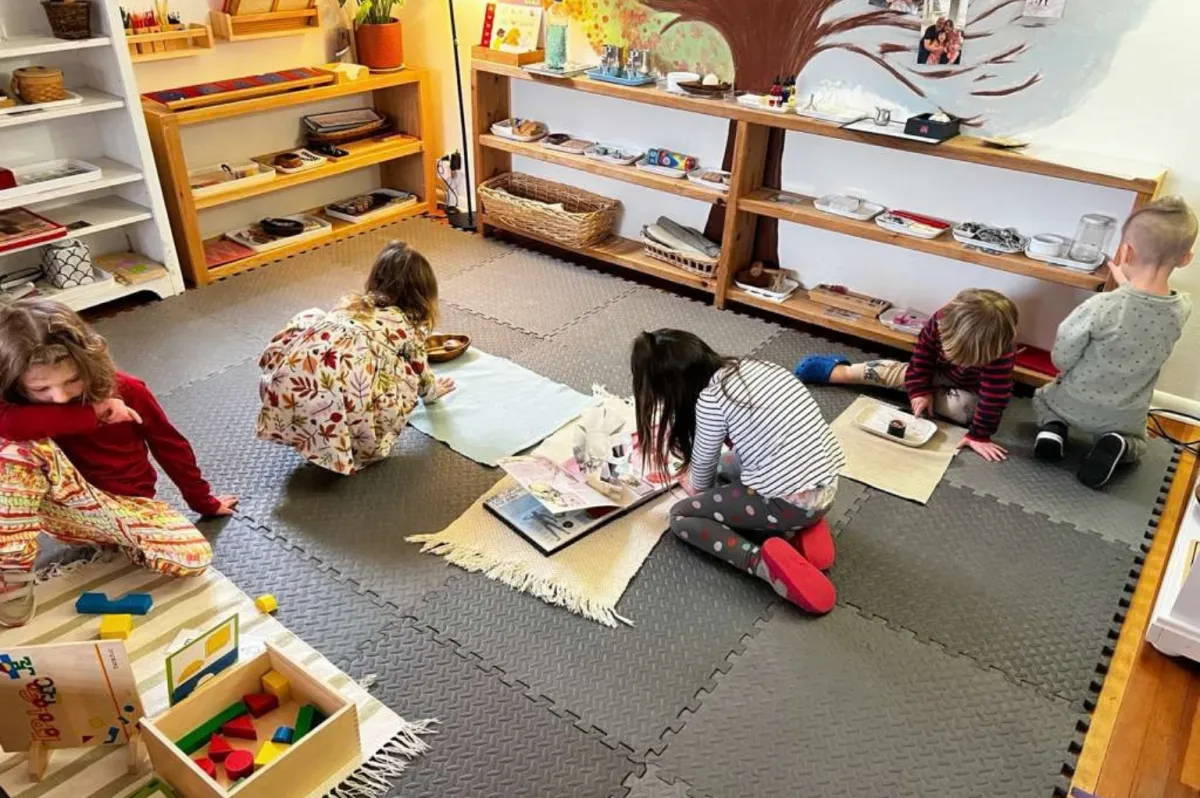
Multi-Age Preschool
Ages 2½- 6 · 8:30 AM–12:00 PM
A warm, responsive introduction to school centered around relationships, exploration, play and growing independence. Our teachers begin with the child in front of them and create opportunities that invite each child forward.
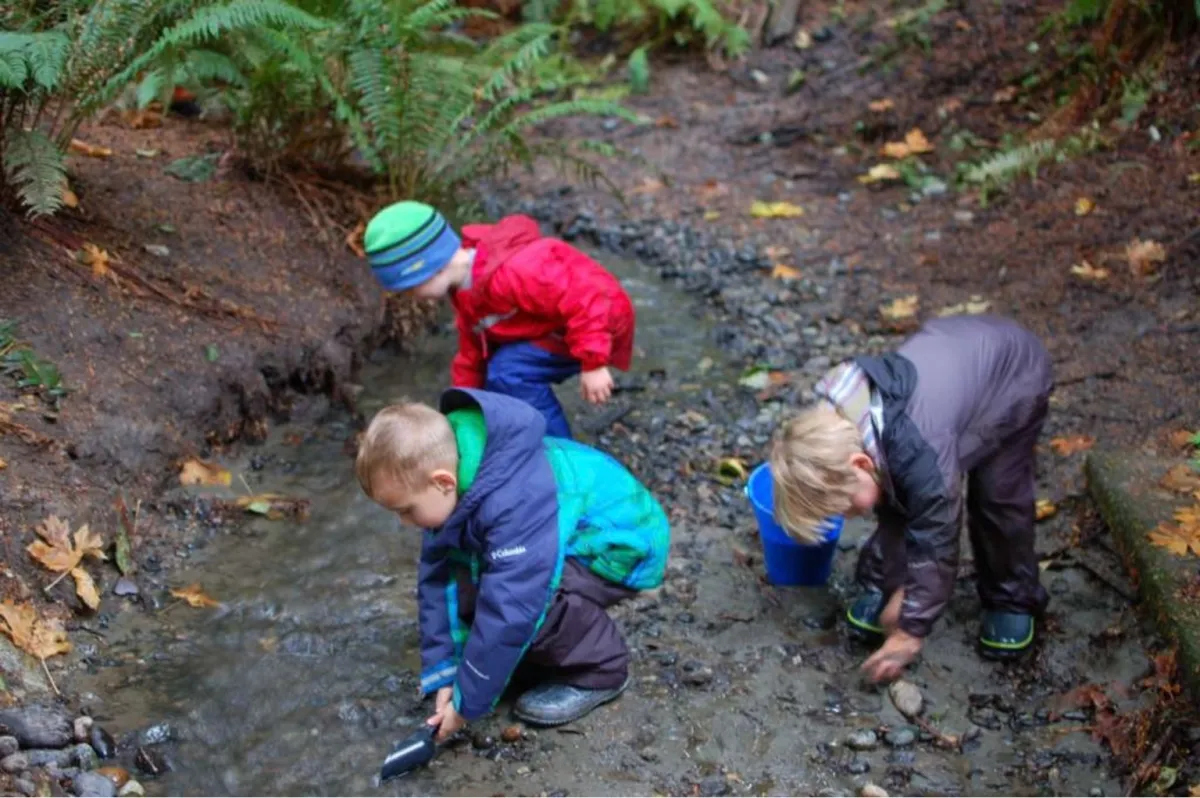
Junior Kindergarten
K-bound · 8:30 AM–12:30 PM
A five-day program for children heading to Kindergarten the following school year. Junior Kindergarteners stay part of a multi-age community — learners and leaders — with extra time to prepare for what's next, including our Forest Kindergarten component for outdoor exploration, risk-taking and teamwork.
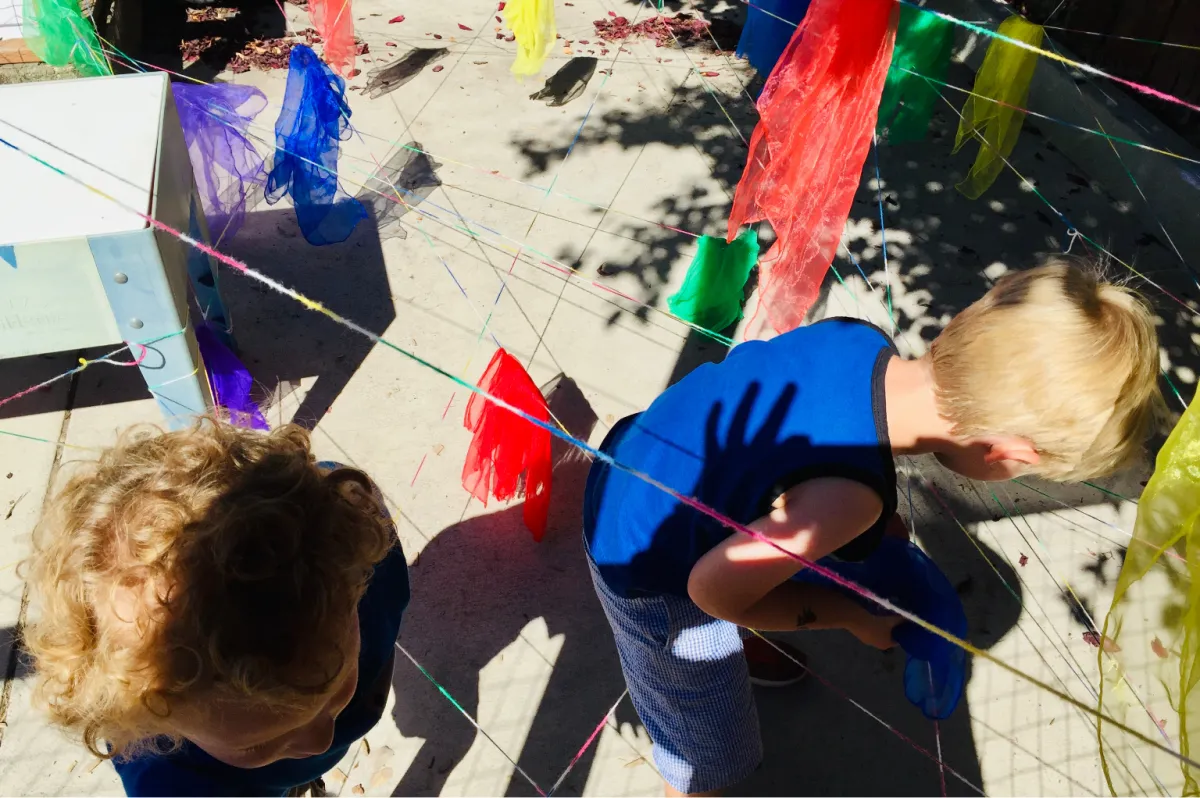
Afternoon Camps
FOR Enrolled AM Cove children
For families who would like a longer day, optional afternoon camps extend the day through engaging experiences, projects, play and exploration.
Morning Program + Afternoon Camp = care available until 4:00 PM.
Multi-Age Preschool
Ages 2½- 6 · 8:30 AM–12:00 PM
A warm, responsive introduction to school centered around relationships, exploration, play and growing independence. Our teachers begin with the child in front of them and create opportunities that invite each child forward.
Junior Kindergarten
K-bound · 8:30 AM–12:30 PM
A five-day program for children heading to Kindergarten the following school year. Junior Kindergarteners stay part of a multi-age community — learners and leaders — with extra time to prepare for what's next, including our Forest Kindergarten component for outdoor exploration, risk-taking and teamwork.
Afternoon Camps
FOR Enrolled AM Cove children
For families who would like a longer day, optional afternoon camps extend the day through engaging experiences, projects, play and exploration.
Morning Program + Afternoon Camp = care available until 4:00 PM.
Admissions
Joining The Cove
The Cove is intentionally multi-age. Rather than separating children into traditional Preschool and Pre-K classrooms based solely on age, children ages 2½–6 learn together in a community where they can grow at their own pace, learn from one another, and take on different roles as they develop.
1
Get to know us
Attend a virtual open house or schedule a call with our founder.
2
Come experience The Cove
Sign up for an open house. If open houses aren't available, schedule a call with our founder as your next step.
3
Apply
Families who feel aligned with The Cove can begin the application process below.
Now Enrolling
Fall 2026
Applications for the 2026–2027 school year are now open and we have open spots.
Begins November 2026
Fall 2027 Enrollment
Rolling admissions · $85 application fee. Open Houses released November 15th.
YOUR cove journey starts here
Fall 2028 + Beyond
A Little Early? Right on Time.
Whether your little one is on the way or you're planning ahead, we'd love to welcome you into The Cove community.
Discover our approach to childhood, explore our educational philosophy, and stay connected as your family grows.
Join our early-interest list, and we'll also keep you informed when admissions open for your anticipated enrollment year.
A place to begin, long before preschool does.
Frequently Asked Questions
A Closer Look at The Cove.
What makes The Cove different from other preschools?
What if nothing was wrong? What if everything became possible?
At The Cove, we begin from the perspective that there is nothing wrong with a child. We know how we see children changes how we respond to them. And how we respond shapes what becomes possible.
Rather than focusing on what a child cannot yet do, we look at who they are, what they may be communicating, and the conditions that help them thrive.
Our intentionally designed, multi-age environment combines hands-on learning, meaningful relationships, mindfulness, emotional awareness, and practices that help children develop greater self-regulation.
While many early childhood programs teach children to identify emotions, we take that learning further. Children begin to notice where emotions show up in their bodies, recognize what is happening within themselves, and practice ways to return to a more regulated state. These practices are woven into everyday life at The Cove rather than taught only when something goes wrong.
Over time, children develop greater self-awareness, independence, and the ability to regulate themselves in increasingly complex situations. This is something we regularly hear stands out when Cove children transition into kindergarten.
We believe education is about more than preparing children academically. It is about helping them understand themselves, connect with others, stay curious, and develop the inner resources they will carry with them long after preschool.
At The Cove, we do not ask children to fit into a predetermined mold. We create the conditions for more of who they are and what they are capable of to become available.
Why is The Cove tuition higher than surrounding preschools?
Tuition at The Cove reflects more than the hours a child spends in the classroom. It reflects the depth and intentionality of the experience we are creating during some of the most formative years of a child’s life.
Of course children are developing academic, social, and emotional skills here. But what we are really teaching is a perspective and a way of engaging with themselves, other people, and the world around them.
Children learn to notice what is happening within them, understand their emotions in connection with their bodies, approach challenges with curiosity, communicate what they need, and see themselves as capable rather than deficient. These are not simply preschool skills to master and move beyond. They are ways of understanding themselves that can continue to serve them throughout their lives.
Our philosophy is woven into the environment, the language we use, the way teachers respond to children, and the daily practices children experience. The goal is not only to prepare them for kindergarten, but to help shape the lens through which they approach learning, relationships, difficulty, and possibility.
Families who choose The Cove are investing in more than preschool. They are choosing an educational philosophy designed to give their child a foundation they can carry forward.
Is The Cove academic or play-based?
Neither. The Cove is process-based.
We are less focused on whether an experience is labeled “academic” or “play” and more interested in what is happening within the child as they engage, explore, problem-solve, create, connect, and make meaning.
Children develop literacy, math, science, social, and executive-function skills throughout their day, but the goal is not simply the acquisition of content. We pay attention to how children learn, what they are interested in, how they respond when something is difficult, how they communicate, how they regulate themselves, and how they begin to understand their own thinking.
Play is one of the ways children engage in this process. So are conversation, movement, hands-on work, experimentation, observation, reflection, and direct instruction when it is useful.
Rather than asking, “Is this academic or play-based?” we ask, “What is this experience making possible for this child?”
Our goal is not simply to teach children what to know. It is to help them develop the processes they will use to learn, adapt, connect, and navigate the world throughout their lives.
What does a typical day look like?
Each day at The Cove is thoughtfully designed to balance freedom and structure, independence and connection, and individual exploration and collaborative learning.
Walk into The Cove during our work period and you may notice something distinctive: The Cove Hum. It is not silence, and it is not the noise and constant activity often associated with a preschool classroom. It is the quiet current of children talking, moving, concentrating, creating, and becoming deeply engaged in purposeful learning.
Children move throughout the day between hands-on learning, creative exploration, outdoor play, movement, conversation, social experiences, and opportunities to practice independence. Mindfulness, emotional awareness, and relationship skills are woven naturally throughout.
Our faciliators observe and respond to what is happening within the classroom, introducing new concepts, encouraging curiosity, and allowing children the time and space to explore their discoveries.
Our rhythm is predictable enough to create security and spacious enough for children to follow their curiosity, concentrate deeply, and become genuinely engaged in their learning.
What is the difference between preschool and daycare?
Both preschool and daycare can provide nurturing environments where children learn, develop relationships, and grow. The primary distinction is often the structure, schedule, and educational focus of the program.
Daycare is generally designed to provide care across the working day and often serves a larger number of children across multiple classrooms and age groups. Preschool is typically built around a school-year educational program, with enrollment determining which classes and schedules can be offered.
Preschool generally follows a more structured school-year calendar with an intentional early childhood educational philosophy and curriculum. Because The Cove is a small private preschool, each program needs enough enrolled children to create both a meaningful classroom community and a sustainable program.
For example, an afternoon class may be available while four or more children are enrolled, but if enrollment drops below that minimum, that particular day or program may no longer be offered.
This allows us to remain intentionally small rather than filling classrooms simply to maintain a larger childcare operation.
At The Cove, our primary purpose is education and development. Optional afternoon programming extends the school day for enrolled families when enrollment supports it. Our environment encourages independence, curiosity, social-emotional development, and hands-on learning through an intentional approach to early childhood education.
How does The Cove approach challenging behavior?
Our POV is that behavior is communication.
When a child is having difficulty, we look beyond the behavior itself to understand what may be happening developmentally, emotionally, socially or within the environment.
Rather than immediately labeling behavior as good or bad, we consider the child's developmental stage, emotional experience, environment, and emerging skills.
Our facilitators guide children in identifying emotions, recognizing what is happening in their bodies, expressing their needs, and developing the skills to navigate challenges.
We maintain clear, developmentally appropriate boundaries while approaching each child with curiosity, compassion, and respect.
Our goal is not simply to change behavior. It is to help children develop the awareness and skills to navigate their experiences with growing confidence and independence.
We maintain clear boundaries while approaching children with curiosity, respect and knowing that the behavior is something to understand, not simply control.
How does The Cove prepare children for Kindergarten?
Kindergarten readiness is an outcome of something deeper.
At The Cove, we focus on building the capacities underneath learning: independence, confidence, curiosity, love of learning, critical thinking, emotional awareness, problem-solving, resilience, and the ability to navigate relationships and new environments.
Academic foundations grow within that. Children develop early literacy, mathematical thinking, language, and other school-readiness skills through meaningful, hands-on experiences.
Rather than teaching toward the next classroom, we are developing children who know how to think, communicate, adapt, connect, and engage deeply in their learning.
When those foundations are in place, children are not only ready for kindergarten. They are building capacities they will carry with them far beyond it.
Why does The Cove have multi-age classrooms?
Children do not develop at the same pace, and we design their learning environment to reflect that.
In a multi-age classroom, children have the opportunity to experience themselves as the youngest, the oldest, and somewhere in between. Children learn from one another through observation, collaboration, and shared experiences.
Younger children learn through observation and interaction with older peers. Older children develop leadership, patience, confidence, and responsibility as they share their knowledge and experiences. And children in the middle practice both learning from others and helping those around them.
It also reflects the real world more accurately. Outside of traditional school settings, we rarely spend our lives exclusively with people our exact age. We live, work, collaborate, and build relationships across generations, experience levels, and perspectives.
A multi-age environment gives children early practice navigating those differences while allowing facilitators to respond to developmental readiness rather than assuming every child of the same age should be doing the same thing at the same time.
At The Cove, children are not simply learning alongside peers. They are learning how to be part of a community.
How does The Cove partner with parents?
We see parents as important part of their child's school journey. We know children benefit when the important adults in their lives approach their development with shared understanding, curiosity, and respect.
Our relationship with families extends beyond sharing information about classroom activities. We help parents understand the philosophy behind our educational approach and offer perspectives that encourage a deeper understanding of their child's experiences and development.
Understanding what we notice, why we respond the way we do and how our philosophy informs the classroom experience is a huge part of the parent partnership.
We value open communication, curiosity, thoughtful questions, and a willingness to consider different perspectives as we work together to create an environment in which children can thrive.
A shared understanding, and mutual respect is at the core of The Cove community.
How does the admissions process work?
Our admissions process is designed to help families get to know The Cove while allowing us to learn about your child, your family, and what you are looking for in a preschool experience.
1. Start with a conversation
Complete our inquiry form and schedule an introductory call. We will learn about your family, share our philosophy, and discuss our programs and availability.
2. Get to know one another
Complete our family questionnaire so we can learn more about your child, their interests, developmental journey, and your family's priorities.
3. Visit The Cove
Join us for an in-person visit to experience our environment, meet our team, and explore whether The Cove aligns with what you envision for your child.
4. Application and child visit
Families interested in moving forward complete an application and submit the application fee. We then arrange a child visit so your child can experience our environment and we can begin getting to know them.
5. Invitation to join The Cove community
When we determine that The Cove is a good fit and an appropriate opening is available, we extend an enrollment invitation. Families have two weeks to accept and complete the enrollment process.
We believe choosing a preschool is an important decision. Our process allows both families and The Cove to explore whether our philosophy, environment, and approach are aligned.
Does my child need to be potty trained?
No. We recognize that toileting is a developmental process and that children reach this milestone at different times.
We partner with families to encourage independence and help children develop confidence as they learn to recognize and respond to their body's signals.
We approach toileting with patience, respect, and the understanding that every child develops at their own pace.
Although we are a process based school, potty training is the one time we allow a reward system if that is what's working at home.
What is your class size / teacher-child ratio?
Our classroom environment is intentionally designed to create meaningful relationships between children and teachers.
We recognize that children thrive when they feel seen, understood, and connected to the adults guiding their learning. Our teachers observe each child closely, respond to their individual development, and create opportunities for both independent exploration and meaningful group experiences.
Our maximum class size is 14 children, with a teacher-child ratio of 6:1 or 8:1 depending on ages at enrollment.
What ages do you serve?
The Cove serves children approximately 2½ through 6 years of age, with program placement based on age and developmental readiness.
Our Preschool/Pre-K program serves children ages 2½ to 6 in an intentionally multi-age classroom.
Our Junior Kindergarten program is designed for children preparing to enter kindergarten the following school year and multi-age Monday, Wednesday and Friday depending on enrollment. It offers additional opportunities to develop independence, confidence, and foundational skills for the transition to elementary school.
Our multi-age environment allows younger children to learn from older peers while older children develop leadership, patience, and a sense of responsibility.
Attend An open House or schedule a visit
What Becomes Possible When Children Are Seen Differently?
At The Cove, we begin with a different question.
Not, “How do we get this child ready?”
But, “What becomes possible when we create the conditions for this child to thrive?”
You can read about our philosophy, our multi-age classroom, and the way we approach learning. But when you walk into The Cove, you can feel it and see it in practice.
You hear The Cove Hum.
You see children deeply engaged rather than constantly directed.
You notice independence, connection, curiosity, and purpose.
Because when we change how we see children, we change how we respond to them.
And that changes what becomes possible.
Come see what becomes possible for your child.